Key takeaways
- Price = (ingredients + packaging + labour + overhead share) ÷ (1 − target margin).
- Price per serving, then multiply by the servings of each size; it keeps sizes consistent.
- Charge design complexity as add-ons (fondant, sugar flowers, figures, photo prints), not by guesswork.
- Take a deposit before you buy special ingredients; 50% is common for custom cakes.
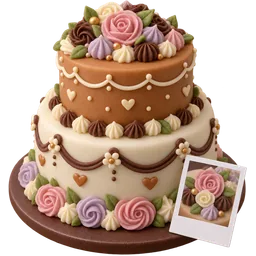
Custom cakes are where bakeries make the most per order — and where they most often lose money without noticing. The cake that took a decorator five hours gets the same price as the one that took one, because both were “an 8-inch with flowers”. Here is a formula you can apply to every cake, and a way to put it into your counter so every quote comes out the same.
How do you price a custom cake?
Price = (ingredients + packaging + labour + overhead share) ÷ (1 − target margin).
That is the whole formula. The work is in getting honest numbers for each part:
| Part | What goes in it | How to get the number |
|---|---|---|
| Ingredients | Sponge, fillings, frosting, decorations | Recipe costing per serving × servings |
| Packaging | Box, board, dowels, ribbon | Supplier prices |
| Labour | Baking, filling, decorating, consultation | Hours × your hourly cost (wage + taxes) |
| Overhead share | Rent, power, equipment, software | Monthly overhead ÷ cakes per month, or a % |
| Margin | What you keep | Your target, e.g. 50–65% on custom work |
Step 1: Know your cost per serving
Cost your base recipes per serving, not per cake. A serving is usually a 1 × 2 × 4 inch party slice. If a vanilla sponge with buttercream and strawberry filling costs a known amount per serving in ingredients, every size is just servings × that amount.
This is where recipe costing earns its keep: list each ingredient with its wastage, set the batch yield, and the cost per serving updates when butter or strawberries change price.
Typical servings by size:
| Size | Party servings |
|---|---|
| 6-inch round | 8–12 |
| 8-inch round | 20–24 |
| 10-inch round | 28–38 |
| 12-inch round | 40–56 |
| Quarter sheet | 24–30 |
| Half sheet | 48–60 |
Step 2: Price labour honestly
Time your work for a typical cake of each style: a simple buttercream finish, a textured finish with fresh flowers, full fondant, sugar flowers, figures. Multiply by what an hour of decorator time really costs you — wage plus payroll taxes and benefits — not by what you wish it cost.
Include the consultation. A twenty-minute WhatsApp conversation and a revision of the sketch is labour too.
Step 3: Add a share of overhead
Rent, power, equipment and software exist whether or not you make the cake. The simplest way: divide your monthly overhead by the number of cakes (or hours of production) in a typical month and add that share to each cake. If that is too fiddly, use a percentage of labour.
Step 4: Apply your margin
Divide total cost by (1 − margin). With a 60% margin, a cake that costs 40 to make sells at 100; with 50%, at 80. Custom work justifies a higher margin than case items: the risk of a remake, the design time, and the fact that the customer is buying something nobody else can sell them.
Step 5: Turn it into a price list your counter can use
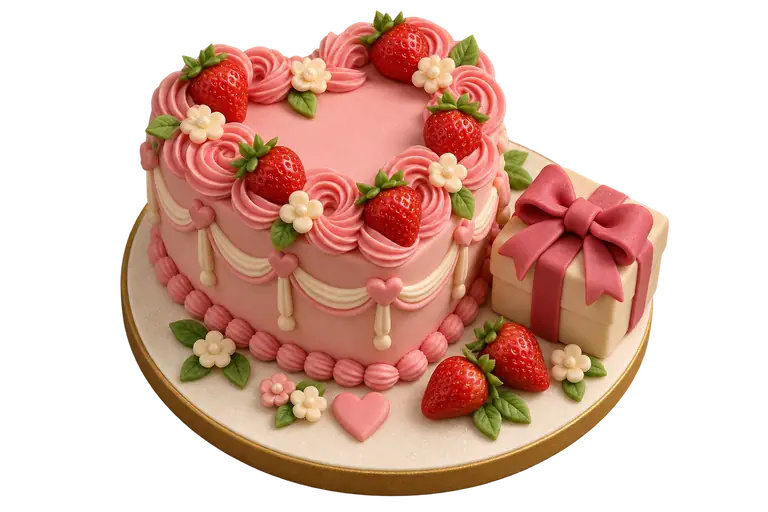
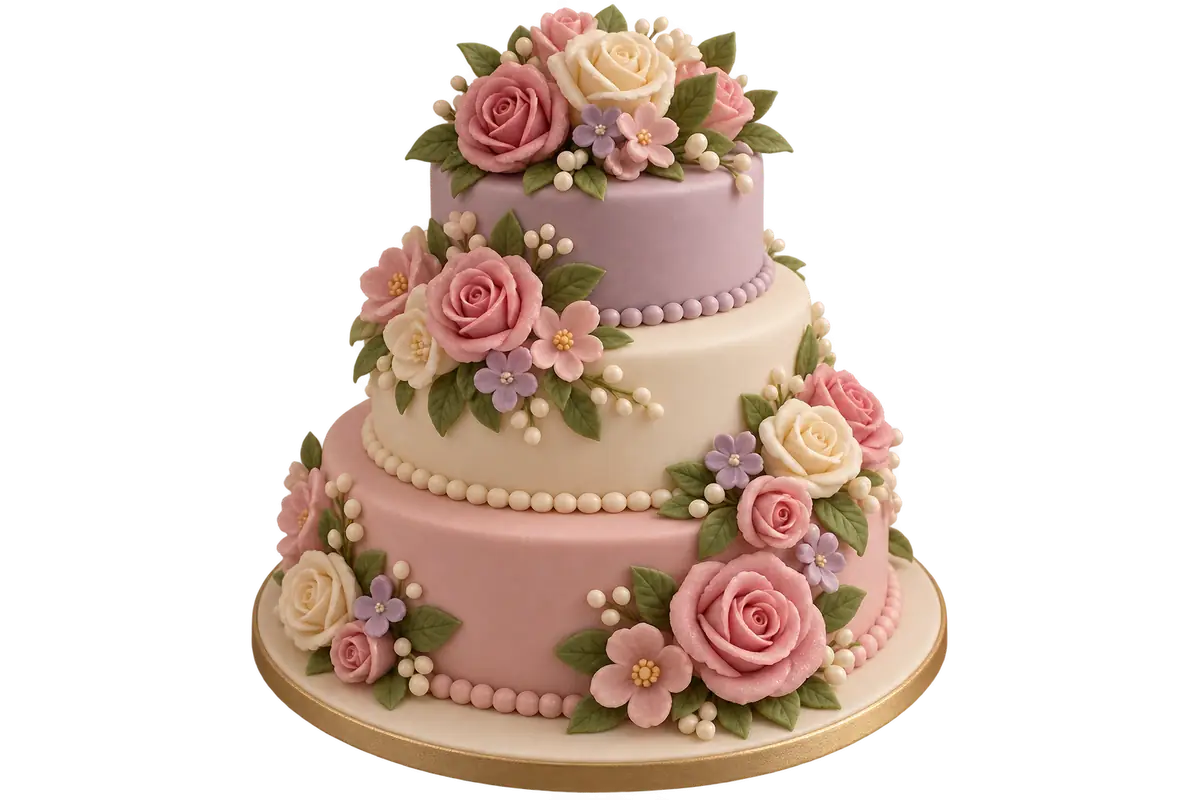
Customers don’t buy formulas. They buy “an 8-inch tres leches with pink rosettes and ‘Feliz 15’ in gold”. So translate the formula into a menu:
- Sizes as variations — 6-inch, 8-inch, 10-inch, two-tier — each with a base price from the per-serving cost.
- Flavour families — standard, premium (e.g. pistachio, Biscoff, mango), each with its own per-serving price.
- Design add-ons as modifiers — fondant covering, sugar flowers (per cluster), figures, edible photo print, gold leaf, extra tier height.
- Rush fee — for orders inside your normal lead time.
In GetBakeryPOS the custom cake order builds the total from those choices, so a new counter assistant quotes exactly what the owner would.
Worked example
An 8-inch, two-layer tres leches cake for 22 people with buttercream rosettes and a written inscription:
- Ingredients: 22 servings × your cost per serving.
- Packaging: box, board, dowel-free (single tier).
- Labour: 1.5 hours (bake, soak, fill, decorate, write).
- Overhead: your per-cake share.
- Divide by 0.4 for a 60% margin.
Then check the result against your price list: if the formula says more than your list, the list is too low.
How much deposit should you take?
For custom cakes, 50% at order is the most common rule, rising to 100% for complex designs or anything with special-order ingredients. The deposit should at least cover what you will spend before the customer collects. Write it into a policy — see our deposit policy guide — and print it on the receipt.
Common pricing mistakes
- Pricing by size only. Two 8-inch cakes can differ by four hours of work.
- Forgetting the consultation. Revisions add up.
- Not updating for ingredient prices. Butter, eggs and pistachio move; refresh costs each quarter.
- Discounting the deposit. If you don’t take one, you carry the risk of every no-show.
- Quoting from memory. Put the price list in the POS so every quote is the same.
Next steps
Start with your five best-selling cakes: cost one serving of each, time the decoration, and rebuild their prices with the formula. Then put sizes and add-ons into your counter. If you want to see it on a real order, book a demo and bring your current price list.

Written by
Editorial team, GetBakeryPOS
The team that writes GetBakeryPOS guides: season checklists, deposit policies, scale setup and switching guides.
Works from the product's own documentation and setup sessions with bakeries in the US, UAE and Pakistan